
Leave-behind sales deck
An 8-slide deck that a buyer can read alone and send to finance. The seller is an invented sensor company. GenPPT made all 8 slides. The prompt is on this page.
Why this deck works
- Each headline is a full sentence. A person who was not in the meeting can read the deck alone.
- Slide 2 gives the full offer. A finance reader can stop there.
- The price slide shows the monthly cost, the one-time cost, and the time to get the money back.
- The last slide gives the trial dates and a line for the owner of each task.
The prompt that made it
GenPPT prompt
8-slide leave-behind sales deck that a buyer can read alone and forward to finance. Seller: Icewarden, an invented company that sells temperature sensors and alerts for refrigerated delivery vans. Buyer: a meal-kit company with 60 vans.

Slide order: 1 title with the outcome, 2 the offer on one slide, 3 the problem in numbers, 4 how Icewarden works, 5 results from a customer, 6 price and return, 7 security and setup questions answered, 8 next step with dates.

Facts to use (all invented): 3.1% of chilled deliveries are thrown away after a temperature breach. For 60 vans that is about $420,000 a year. Icewarden alerts the driver in 90 seconds. A customer with 45 vans cut spoiled deliveries by 71%. Price: $29 a month for each van, plus $120 one time for each sensor. Return in 5 months. Setup takes 15 minutes for each van. Next step: a 30-day trial with 10 vans.

Rules: every slide must make sense with no presenter. Full-sentence headlines. More text than a live deck, but one idea per slide. Style: crisp and clinical, white with ice blue and a red alert accent, simple van and sensor illustrations. No real company names, no real people, no logos.
1 message after the prompt
- Fix three slides and keep the design. Slide 3: correct the spelling "Chiled" to "Chilled". Slide 7: change the headline to "Setup takes 15 minutes for each van." Slide 8: change the headline to "Start with a 30-day trial of 10 vans."
All 8 slides

1. Title 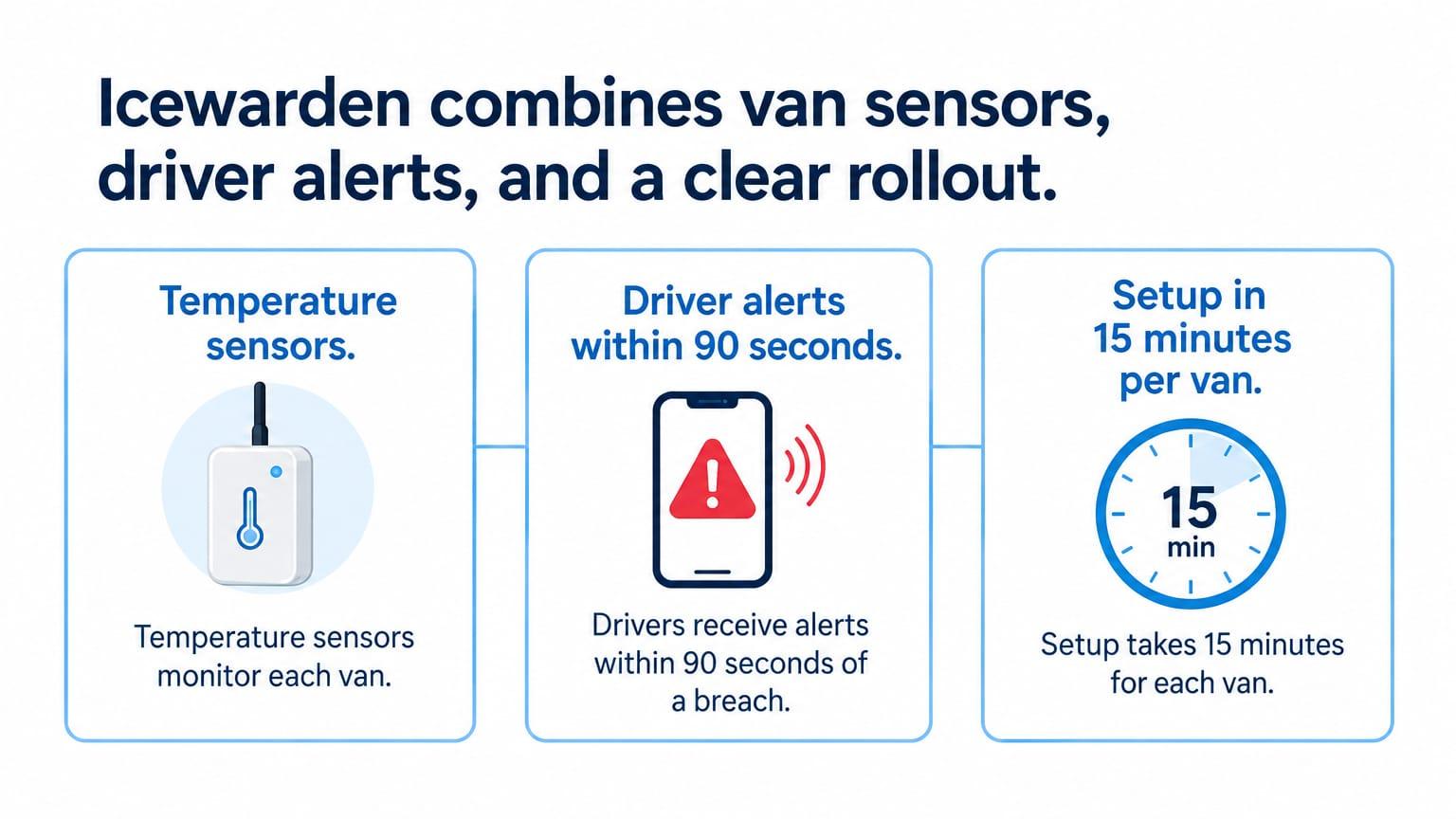
2. The offer 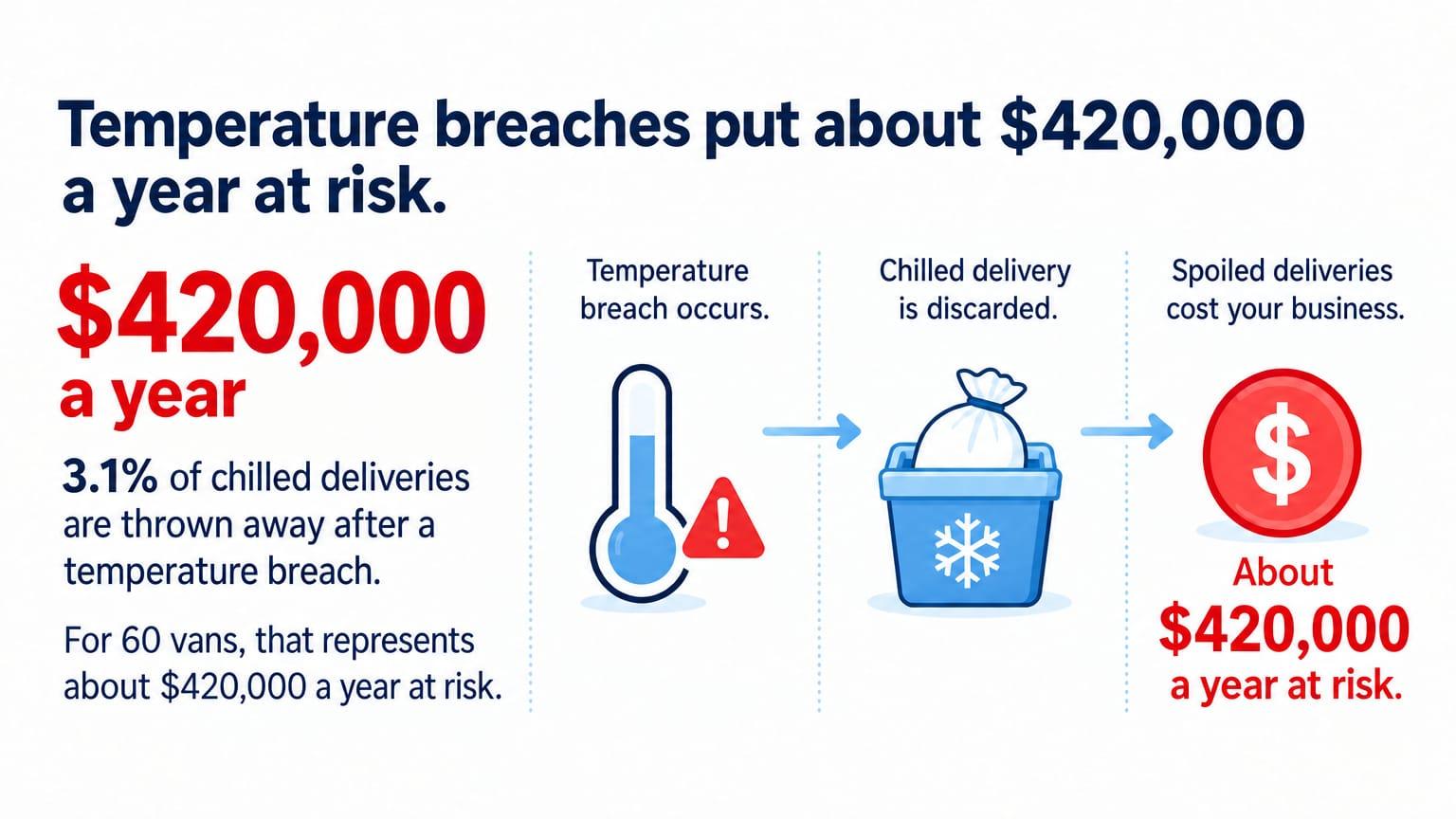
3. The problem in numbers 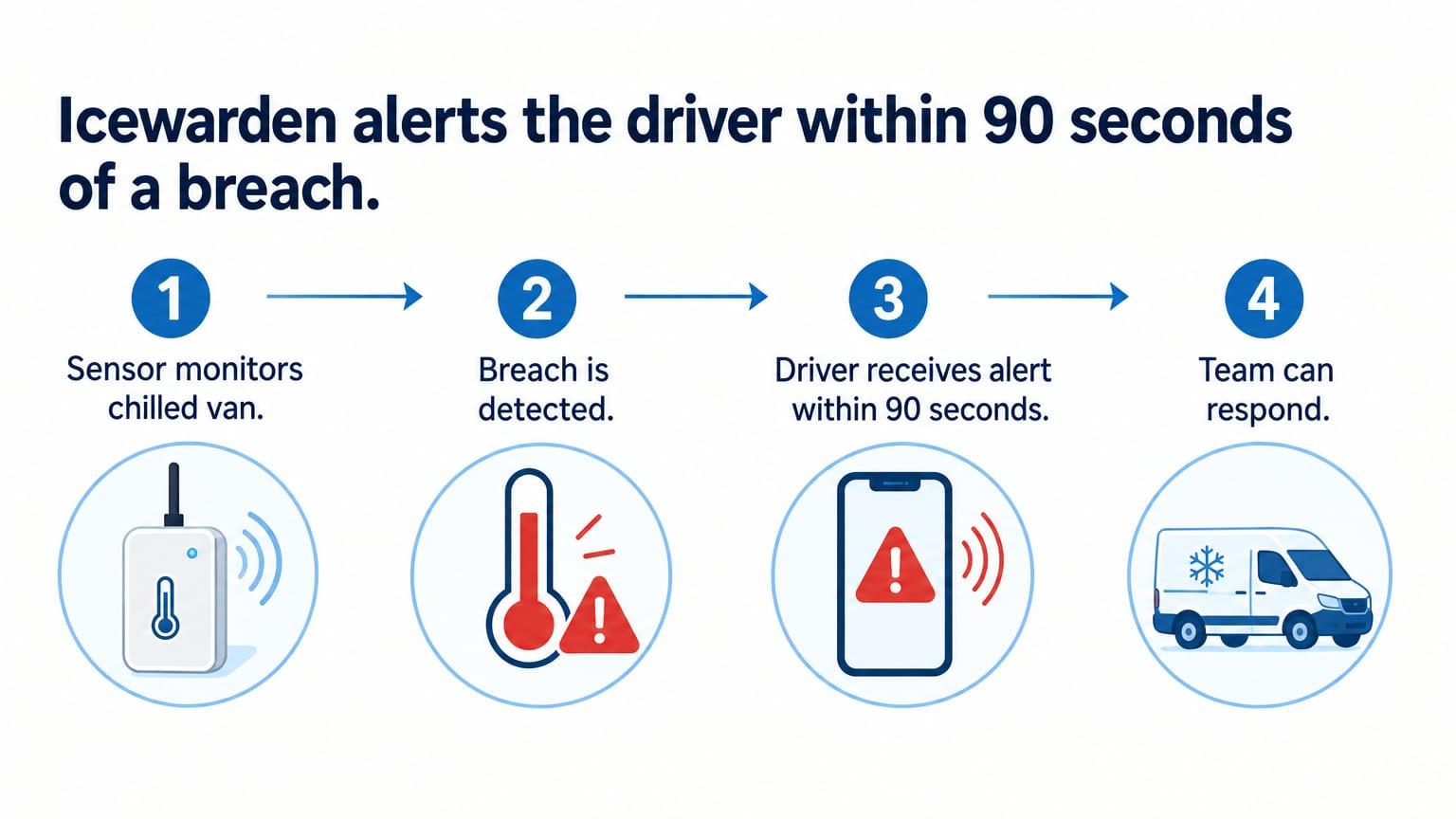
4. How it works 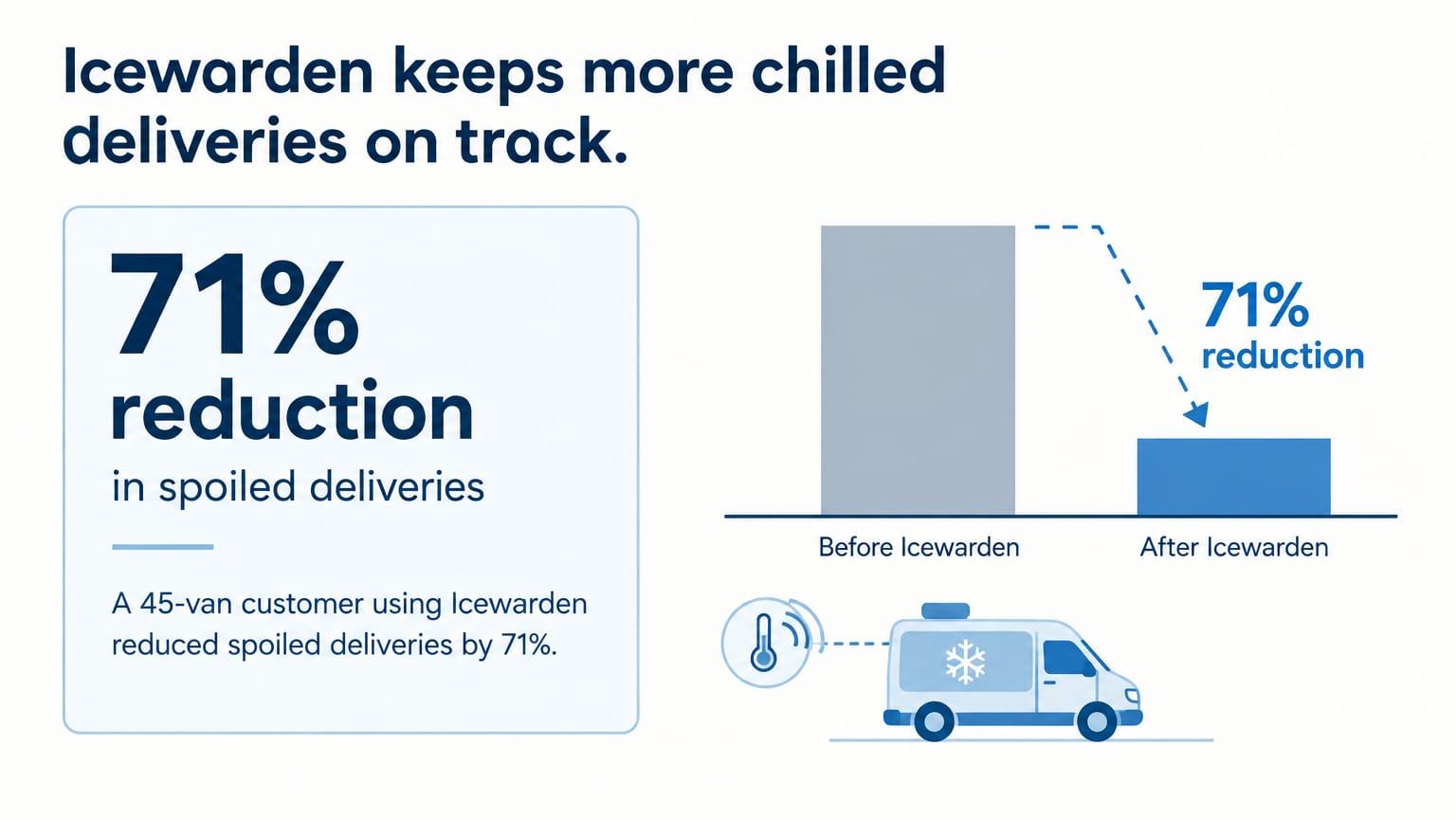
5. Customer result 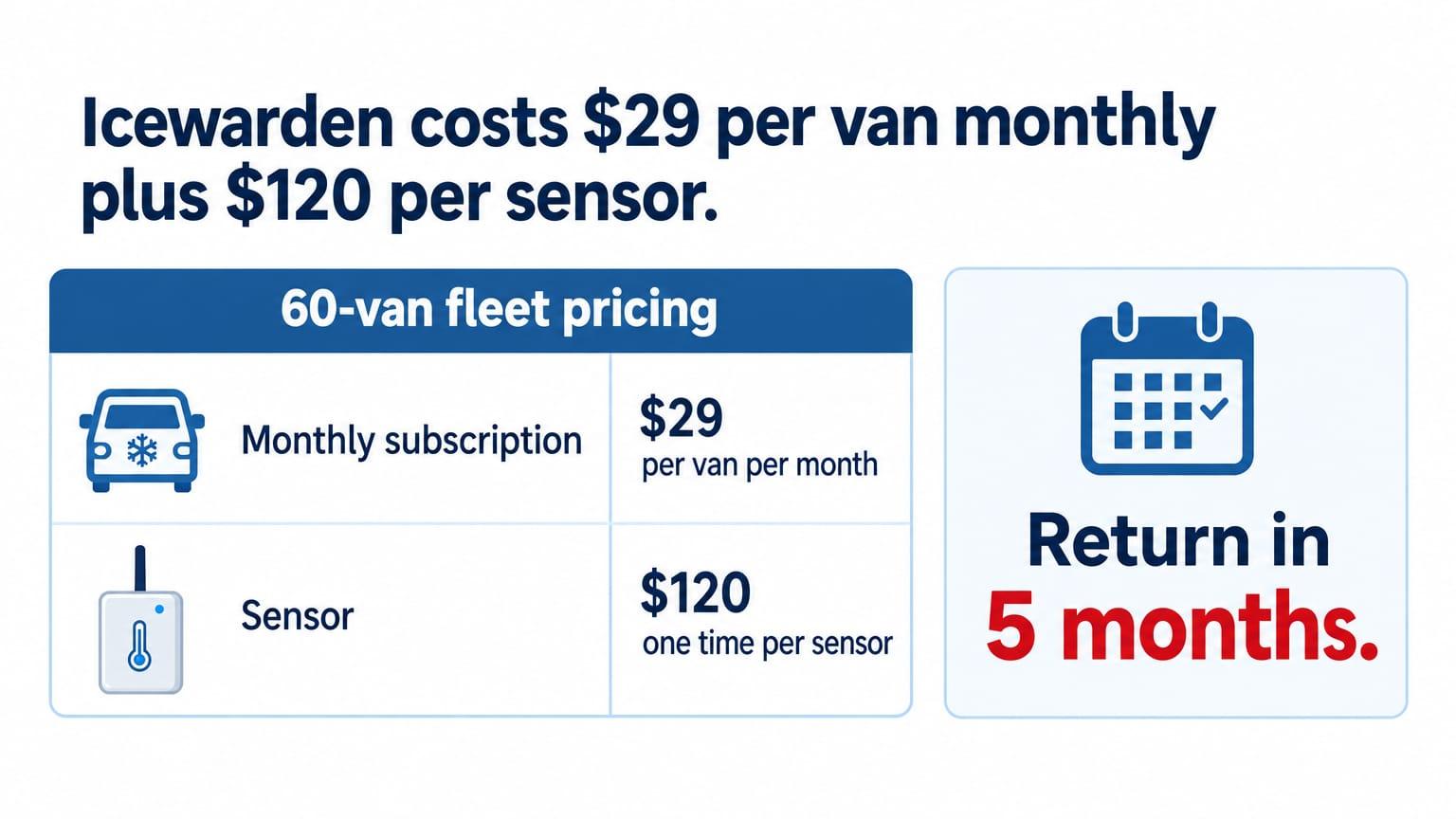
6. Price and return 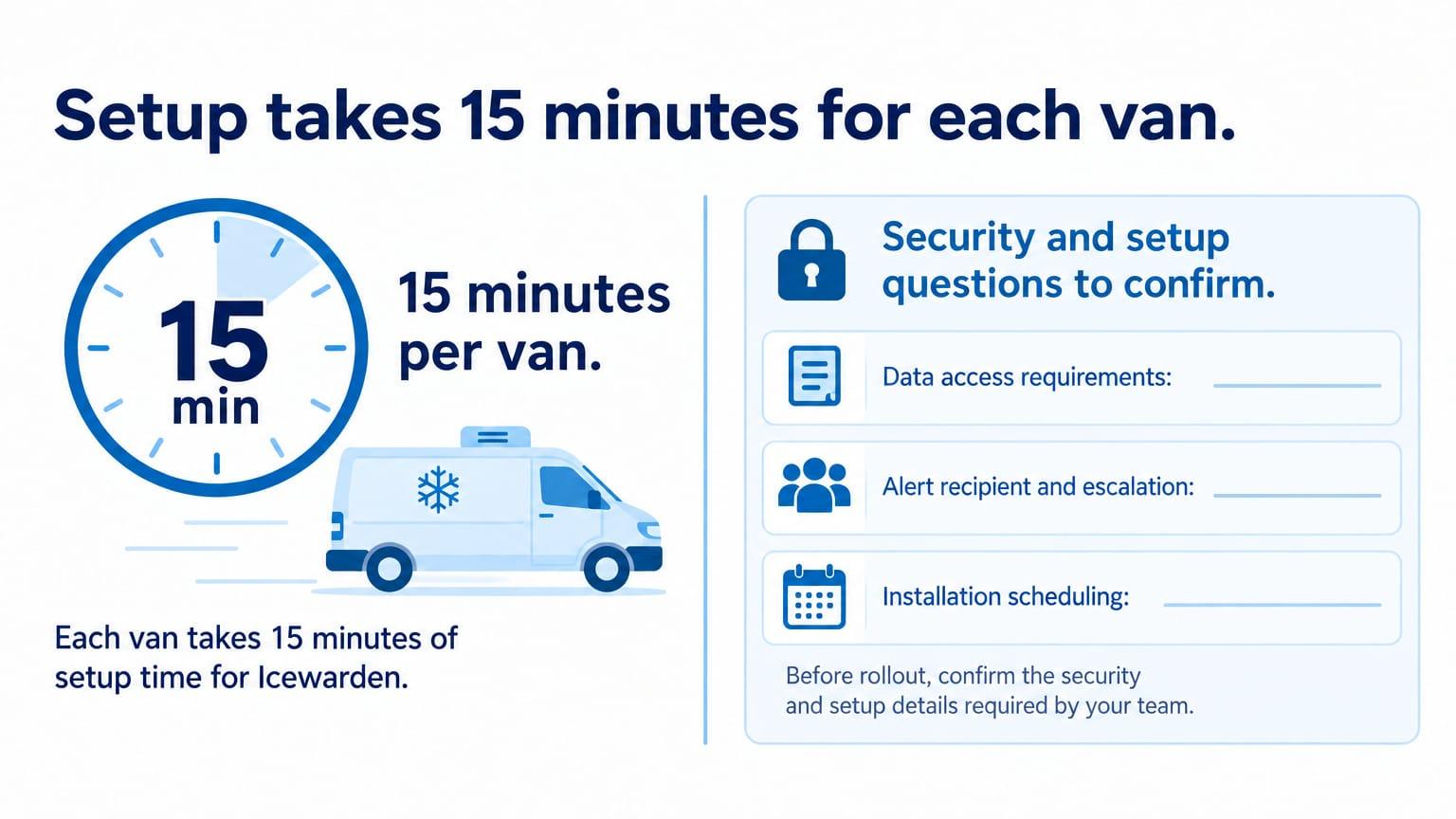
7. Setup and security 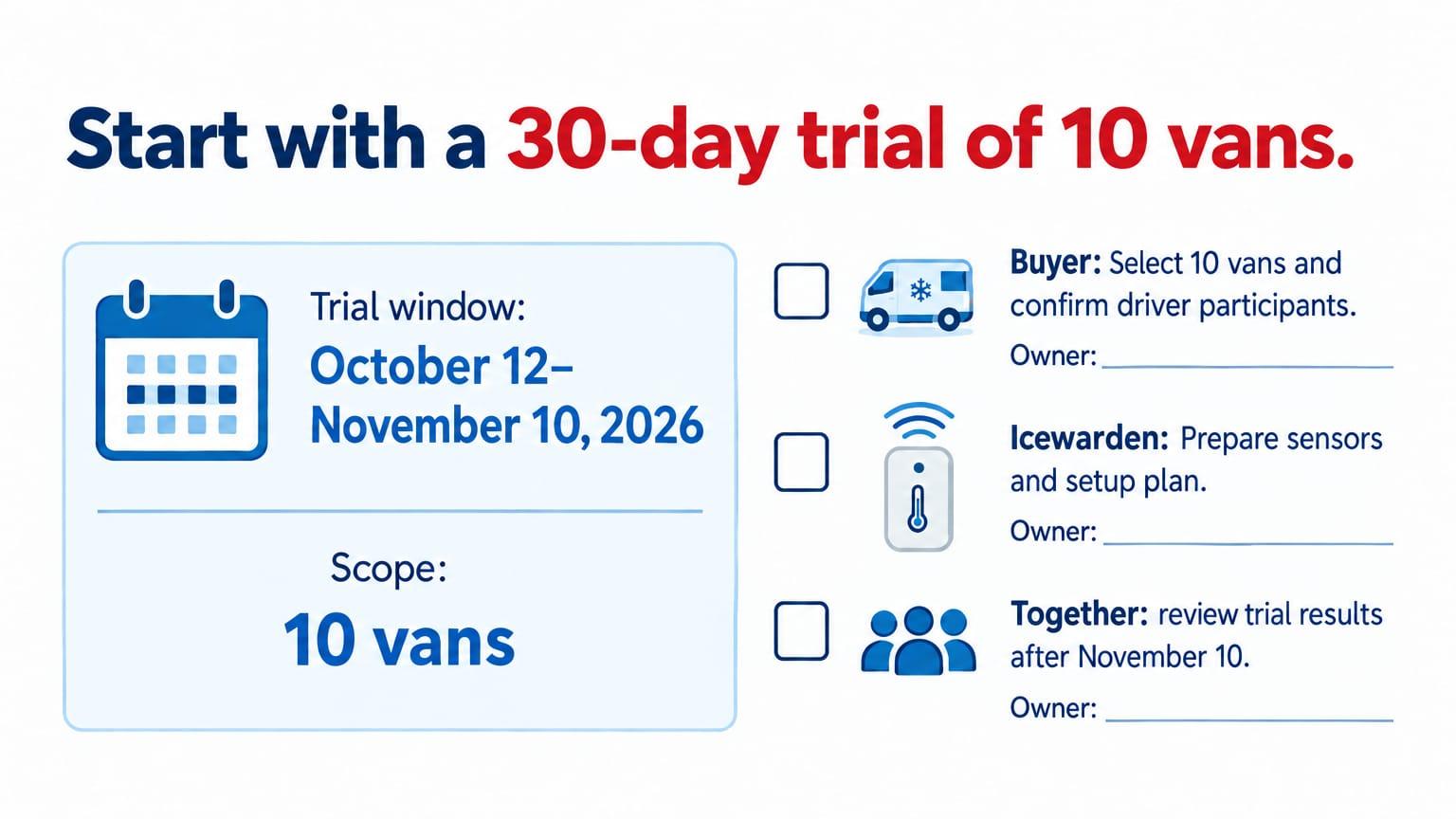
8. Next step